-
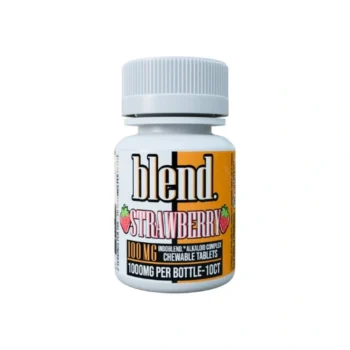
BLEND. Cat’s Claw Tablets 1000mg $34.99Select options
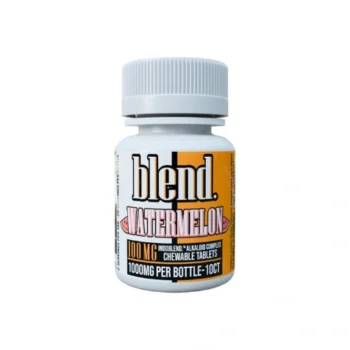
BLEND. Cat’s Claw is a standardized Uncaria tomentosa extract tablet, scored into four 25mg servings per 100mg tablet. Available in Blue Razz, Strawberry, and Watermelon. Each 1000mg bottle holds 10 tablets — about 40 pre-measured servings. This is a different botanical than kratom.
Third-Party Lab Tested
Shop cat’s claw products organized by what the label actually identifies. Compare POA-standardized (TOA-free) extracts, whole bark / full-spectrum products, and ratio-standardized extracts side by side, then review the alkaloid percentage, extraction method and available lab documentation before choosing.
Jump to: Shop Products · Lab Reports · Shop by Alkaloid Profile · What Are Cat’s Claw Alkaloids? · Compare Products · Formats · How to Read Labels · FAQs · Safety Information
Shop Cat’s Claw by Alkaloid Profile or Extraction Type
Cat’s claw bark naturally contains two families of oxindole alkaloids — pentacyclic (POA) and tetracyclic (TOA) — plus other compounds (proanthocyanidins, sterols, glycosides). How a product is processed and standardized determines which of these show up on the label, so we group products by profile rather than by brand name alone.
POA-Standardized / TOA-Free Extracts
Extracts processed to concentrate pentacyclic oxindole alkaloids (POAs) — the compounds most studied for immune activity — while removing tetracyclic oxindole alkaloids (TOAs), which some manufacturers position as working against POA effects. Labels typically state a minimum POA percentage (e.g., “≥1.3% POA, TOA-free”).
Whole Bark / Full-Spectrum
Made from the dried, ground inner bark with no alkaloid isolation or removal — POAs and TOAs remain in their naturally occurring ratio (bark is naturally roughly 90% POA / 10% TOA, though this varies by harvest and plant part). Labels list total alkaloid content rather than a POA/TOA split.
Standardized Ratio Extracts
Extracts standardized to a total alkaloid percentage or extraction ratio (e.g., “3% total alkaloids,” “4:1 extract”) without a TOA-free claim. Useful middle ground for shoppers comparing potency across brands.
Note: “TOA-free” and specific POA percentages are proprietary manufacturer standards, not regulated scientific classifications — always verify against the Certificate of Analysis (COA), not just the front label.
What Are Cat’s Claw Alkaloids?
Cat’s claw (Uncaria tomentosa) is a woody vine native to the Amazon rainforest, traditionally used by indigenous communities throughout Peru and the wider Amazon basin. Its bark and root contain a complex mix of oxindole alkaloids, along with proanthocyanidins, triterpenes, and plant sterols. The two alkaloid families most discussed in the herbal supplement market are:
- Pentacyclic oxindole alkaloids (POAs) — including compounds such as pteropodine, isopteropodine, isomitraphylline, mitraphylline and uncarine F — generally make up the majority of total alkaloid content and are the compounds most product marketing centers on.
- Tetracyclic oxindole alkaloids (TOAs) — a smaller alkaloid fraction naturally present alongside POAs — are the compounds some processors remove to create “TOA-free” extracts.
A front-label percentage may refer to total alkaloid content, POA content specifically, an extraction ratio (like 4:1), or a proprietary formula weight. Those numbers are not interchangeable, and two products both claiming “cat’s claw extract” can have meaningfully different alkaloid profiles. Alkaloid content also varies naturally by plant part (bark vs. root), harvest season and region, which is why standardization and lab testing matter more than the species name alone.
Note on species: most U.S. cat’s claw supplements use Uncaria tomentosa; a related species, Uncaria guianensis, is sometimes used in other products and has a different (lower) oxindole alkaloid profile. Check the Latin name on the label, not just “cat’s claw.”
Compare Cat’s Claw Products at Stealth Wellness
| Product Type | Alkaloid Profile | How to Identify It | Common Formats | What to Check |
|---|---|---|---|---|
| POA-Standardized / TOA-Free | High POA, TOA removed | Label states “TOA-free” + minimum POA % | Capsules, tablets, liquid extract | COA confirming POA % and non-detect TOA |
| Whole Bark / Full-Spectrum | Natural POA + TOA ratio | Label lists total alkaloid %, no TOA-free claim | Capsules, cut bark for tea, bulk powder | Total alkaloid % and plant part (bark vs. root) |
| Standardized Ratio Extract | Total alkaloid %, not POA-isolated | Label states extraction ratio (e.g., 4:1) or total alkaloid % | Capsules, tinctures | Ratio basis (fresh vs. dry weight) and solvent used |
[PLACEHOLDER — replace generic rows above with your actual SKUs once products are live]
Cat’s Claw Capsules, Extracts, Tinctures and Tea
Capsules & Tablets — Pre-measured powdered bark or standardized extract in capsule/tablet form; easiest for consistent, trackable serving sizes.
Liquid Extracts & Tinctures — Alcohol- or glycerin-based extractions offering faster onset and flexible dosing by dropper; check whether the label states alcohol percentage and extraction ratio.
Cut Bark for Tea — Traditional preparation method using dried, shredded bark simmered as a decoction; potency is harder to standardize than capsules or extracts.
Bulk Powder — Ground bark or root sold by weight for those making their own capsules or infusions; requires the most label diligence since standardization claims vary widely.
How to Compare Cat’s Claw Labels and Lab Reports
- Identify the alkaloid basis first. Confirm whether the label is reporting total alkaloid content, POA-specific content, or an extraction ratio — these are three different measurements.
- Separate serving size from potency. A “500 mg capsule” tells you the capsule weight, not how much of that weight is active alkaloid content.
- Match the label claim to the COA. If a product claims “TOA-free” or a specific POA percentage, the Certificate of Analysis should show alkaloid-specific test results, not just a total weight.
- Check the plant part and species. Bark, root and Uncaria tomentosa vs. Uncaria guianensis all carry different alkaloid profiles — the Latin name and plant part should be on the label.
- Don’t convert between products. A milligram of whole bark powder, a milligram of standardized extract, and a milligram of isolated POA are not equivalent — compare like measurements only.
Frequently Asked Questions
What is cat’s claw (Uncaria tomentosa)?
Cat’s claw is a woody vine native to the Amazon rainforest, traditionally used in Peruvian and Amazonian herbal practice. It’s sold today as a dietary supplement in capsule, extract, tincture and bulk bark form.
What’s the difference between POA and TOA in cat’s claw?
POAs (pentacyclic oxindole alkaloids) and TOAs (tetracyclic oxindole alkaloids) are two alkaloid families that occur together naturally in cat’s claw bark, typically in roughly a 9:1 ratio. Some manufacturers isolate and concentrate POAs while removing TOAs; others sell the bark’s natural, unmodified ratio.
Does “TOA-free” mean a product is stronger or better?
Not necessarily — it means the extract has been processed to remove tetracyclic oxindole alkaloids. Whether that processing improves the product depends on which research and manufacturer claims you’re evaluating; there’s ongoing debate in the herbal industry about it, and it isn’t a standardized regulatory term. Compare the COA, not just the marketing claim.
Is whole bark different from a standardized extract?
Yes. Whole bark (or bark powder) reflects the plant’s natural alkaloid ratio and is reported as total alkaloid content. A standardized extract has been processed to hit a specific alkaloid percentage or ratio, which can mean higher potency per gram but a different — sometimes narrower — alkaloid profile than the whole bark.
How do I read a cat’s claw label and lab report?
Check the Latin species name, plant part (bark vs. root), whether the alkaloid claim is total content or POA-specific, and the extraction ratio if it’s a concentrated extract. Then match those claims against the product’s Certificate of Analysis (COA), which should confirm alkaloid content and screen for contaminants like heavy metals and microbials.
Are cat’s claw products lab tested?
[PLACEHOLDER — describe your actual third-party testing program and link to your lab reports library]
Who should avoid cat’s claw?
Cat’s claw may stimulate immune activity and slow blood clotting, so it isn’t recommended for people with autoimmune conditions, organ transplant recipients, pregnant or breastfeeding individuals, anyone on anticoagulant/antiplatelet or blood pressure medication, or anyone scheduled for surgery. See full safety information below and consult a healthcare provider before use.
Safety Information
Cat’s claw is sold as a dietary supplement and has not been evaluated or approved by the FDA to diagnose, treat, cure or prevent any disease. Short-term oral use (studies generally cover up to several months) has an established safety record, but the following groups should avoid cat’s claw or speak with a healthcare provider before using it:
- Pregnant or breastfeeding individuals
- Anyone with an autoimmune condition (e.g., lupus, rheumatoid arthritis, multiple sclerosis), since cat’s claw may stimulate immune activity
- Organ or bone marrow transplant recipients, or anyone taking immunosuppressant medication
- Anyone taking anticoagulant or antiplatelet medication, or with a bleeding disorder, since cat’s claw may slow blood clotting
- Anyone with low or high blood pressure, or taking blood pressure medication
- Anyone scheduled for surgery — stop use at least two weeks beforehand
- Children, without guidance from a pediatric healthcare provider
This information is educational and not a substitute for medical advice. Consult your physician or pharmacist before starting any new supplement, particularly if you take prescription medication or have an existing health condition.